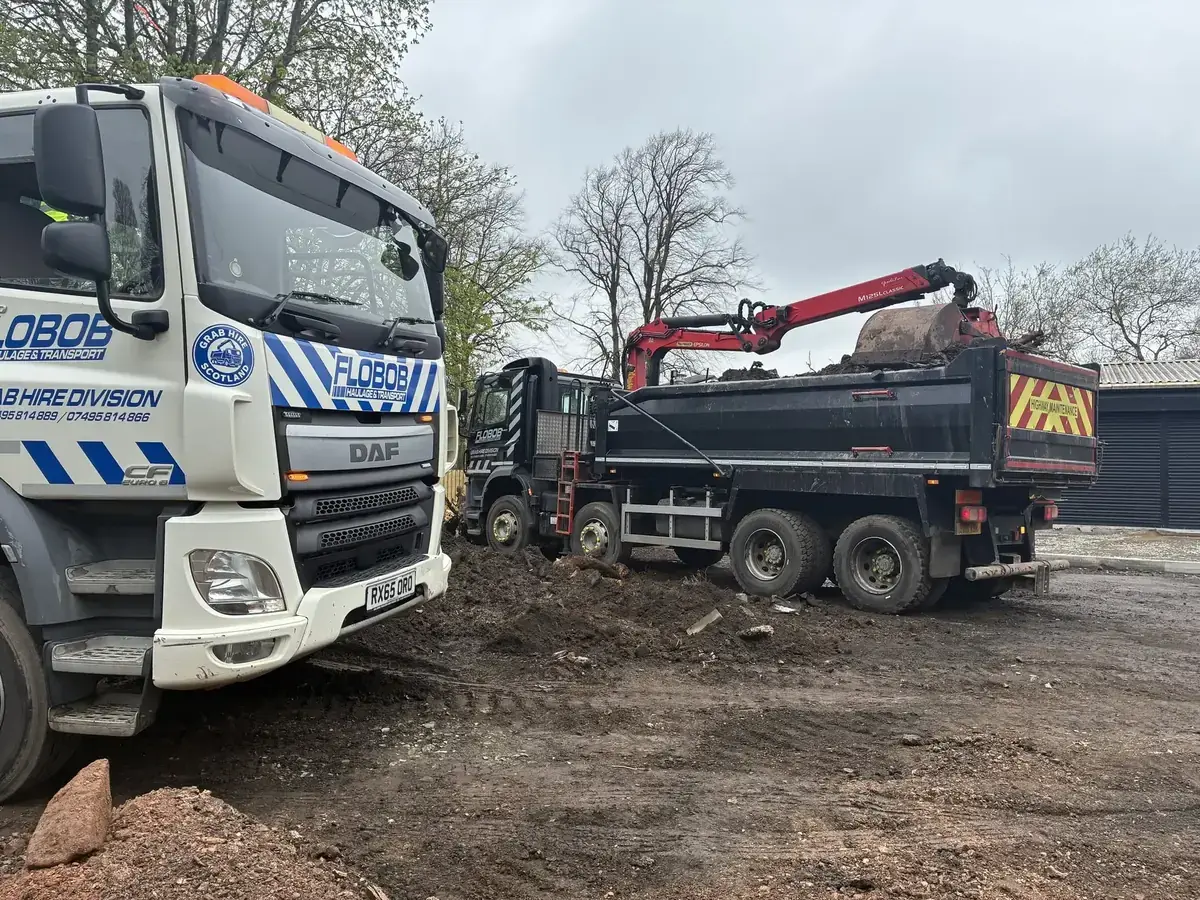
Grab Hire Scotland guide
Do You Need a Permit for a Skip in Scotland? Council Licences Explained (and the Grab Lorry Alternative)
If you are planning a clear-out, renovation or groundworks job, the first question is often where the waste container can go. The answer affects whether you need a skip licence, how long you must allow for arrangements and what your removal options are. In Scotland, a skip placed on a public road needs permission from the local council. A skip fully on private land, such as a driveway, does not need a council skip permit. If the skip will not fit on private land, a grab lorry may be another...
5 min read
If you are planning a clear-out, renovation or groundworks job, the first question is often where the waste container can go. The answer affects whether you need a skip licence, how long you must allow for arrangements and what your removal options are.
In Scotland, a skip placed on a public road needs permission from the local council. A skip fully on private land, such as a driveway, does not need a council skip permit. If the skip will not fit on private land, a grab lorry may be another option: it loads suitable material and takes it away on the agreed visit, rather than leaving a skip in place.
Do I need a permit for a skip?
Start by checking exactly where the skip will sit. If any part of it will occupy the public road, you will generally need a permit from the relevant council. This can include the carriageway, footway or verge, not just the space where vehicles normally drive.
If the skip fits entirely within private property, such as a driveway, a council permit is not needed. Make sure it will not extend onto a public footway or road, and check any restrictions that apply to the property.
Rules, application requirements and fees vary between councils. Check with the council responsible for the road where the skip will be placed. You can also ask the hire company who will apply for the permit and what details they need from you.
If the skip reaches the public road
A skip permit gives permission to occupy part of the public road for a specified period and subject to council conditions. It is not automatic: the council must consider the application, and it may set requirements for the skip’s position, marking or lighting.
Allow time for the application before arranging delivery. For example, Glasgow City Council’s skip permit guidance says applications typically need at least 28 working days’ notice. Payment must be made before the application is considered. The council’s current guidance is the place to confirm its process and requirements.
In Falkirk, the council’s skip permit page lists a fee of £50.10 per week or part-week and asks for applications at least seven days before the requested siting date. This is a local example, not a Scotland-wide rate. For Glasgow, check the council’s current road permit charges. Fees and timeframes can change, so confirm the latest details for your address.
A council application is not the same as a confirmed permit. Check who is responsible for applying, whether permission has been granted and what conditions apply before the skip is delivered.
How skip permit cost is worked out
There is no single skip permit cost for every Scottish council. The fee may depend on the council area and how long the skip will occupy the road. Some councils charge for each week or part-week, and extra requirements may apply depending on the proposed location.
Check the local authority’s published charges before you book. Ask the skip-hire company whether its quote includes the permit fee or whether that will be charged separately. Also confirm whether an extension would mean a further application or additional cost.
A permit is only one part of the overall cost of hiring a skip. You may also need to consider the hire period, skip size and any conditions that affect where it can be delivered.
When a grab lorry can avoid the permit step
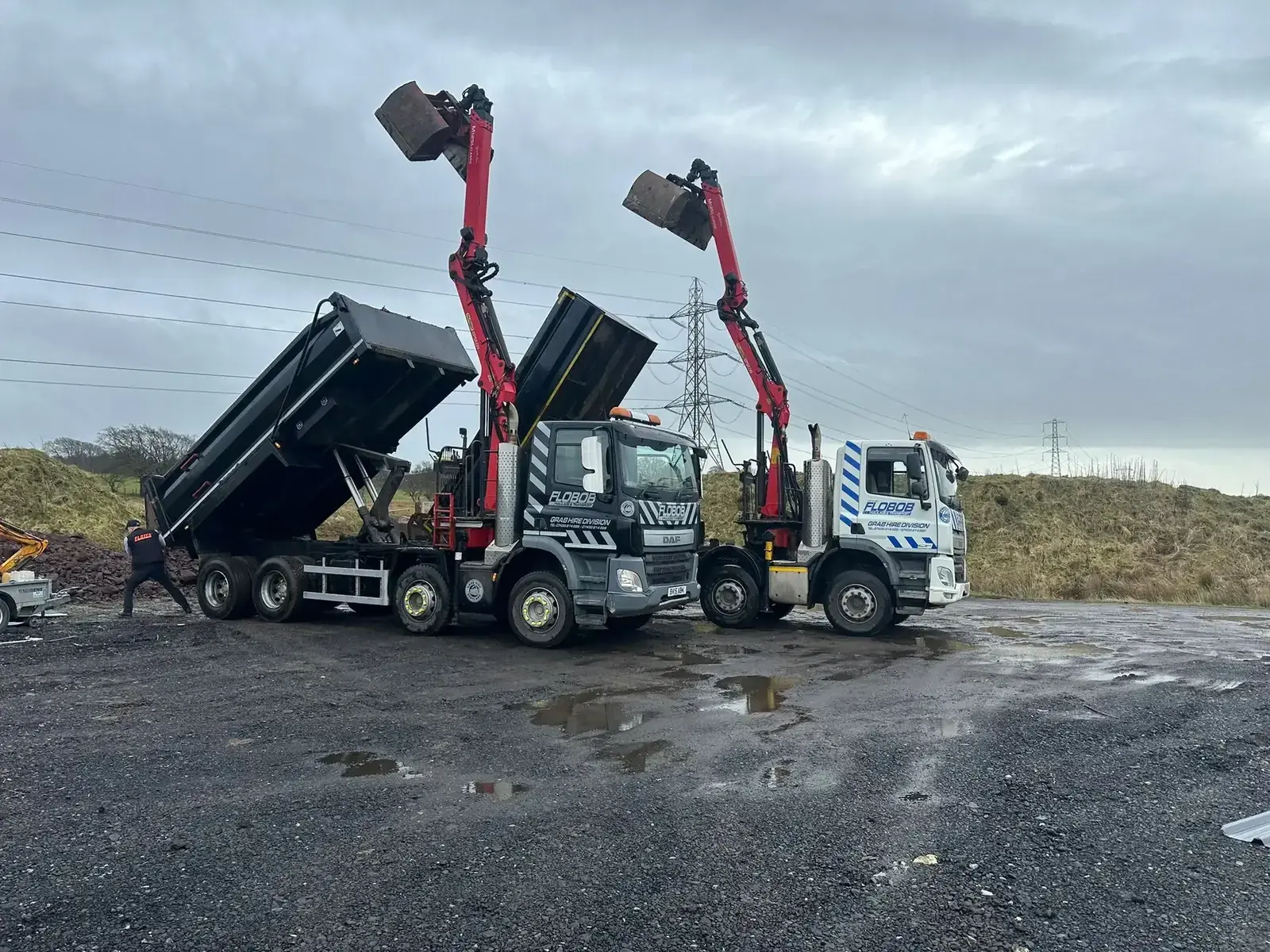
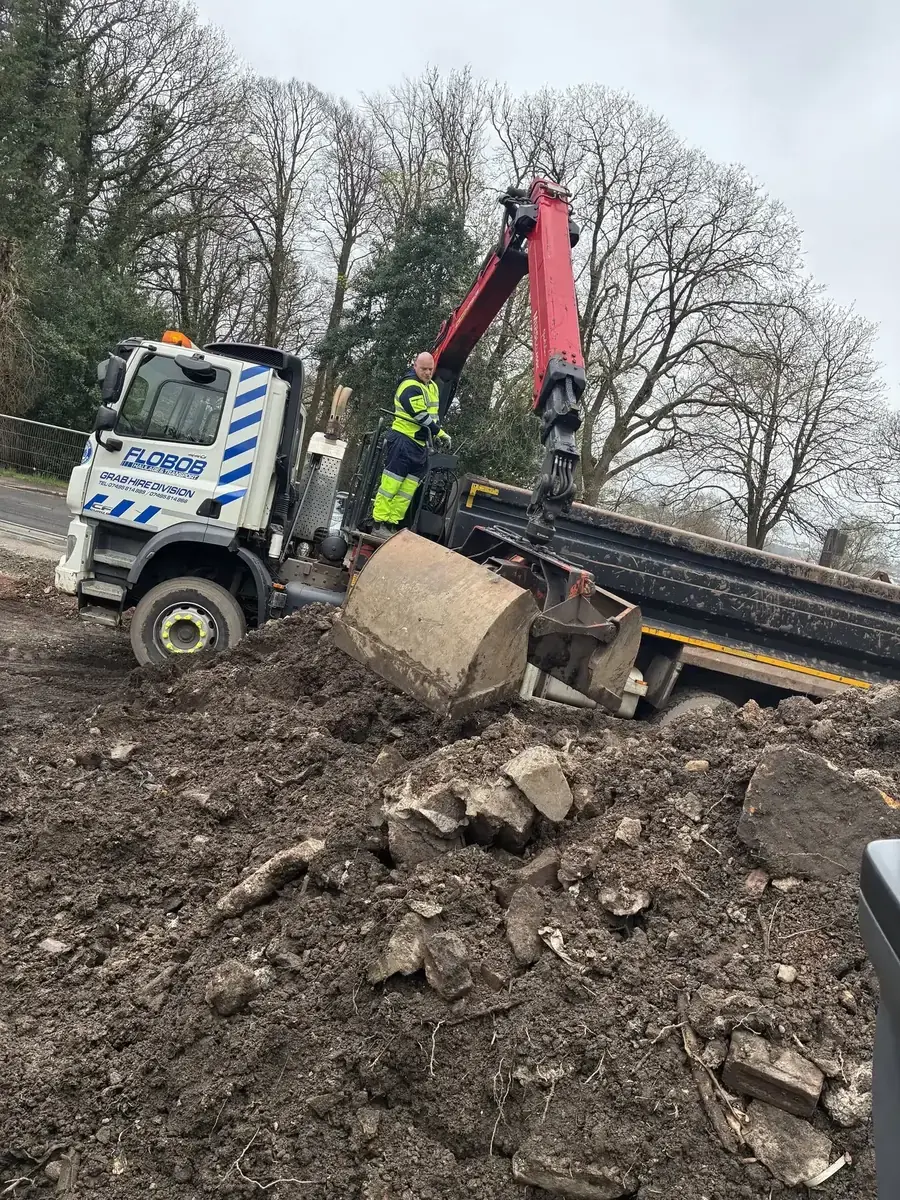
A grab lorry does not stay in one spot for days or weeks in the way a skip does. It arrives for the agreed collection, uses a crane to load suitable material from alongside the vehicle, and takes it away on the same visit. That means the grab route does not involve a council skip permit.
You still need to check the parking and loading arrangements. The lorry needs safe, legal access to stop and operate the crane. Road restrictions, parked vehicles, overhead cables and the position of the material can all affect whether the job is suitable. If the vehicle cannot safely reach or load the waste, the collection may need a different arrangement.
Grab hire can suit domestic and trade work involving accepted inert materials such as soil, gravel, bricks, concrete and rubble. Our grab hire service removes accepted material by crane, so you do not have to load a skip by hand or leave one occupying space.
Our prices start at £220 + VAT for a typical load. Prices can only increase from that floor, depending on factors such as location, access and disposal. A grab lorry can carry up to 16 tonnes per full load, but that is a maximum, not a guaranteed weight for every material. Material type, density, volume and safe vehicle limits affect the usable load.
Check access before choosing the grab option
A grab lorry needs more room than a car or van. Our vehicles are approximately 9.5 m long and 2.6 m wide. The height is around 3.7 m when empty and may be up to about 4.9 m when loaded. These are approximate dimensions, so tell us about any tight entrance, low branches, overhead cables, narrow road or height restriction.
The truck also needs a safe position from which the crane can reach the material. The distance and direction of the lift, obstacles and the ground beneath the vehicle all matter. A driveway is not essential in every case, but the lorry must be able to stop legally and work safely.
Before arranging a collection, consider:
Whether vehicles can park without blocking access or causing an obstruction.
Whether the material is within a practical crane reach from the safe standing position.
Whether overhead cables, trees, walls or other obstacles could affect the lift.
Whether the ground is stable enough for the vehicle.
What the material is and where it came from.
Send photos and measurements if access is tight. We will discuss the details and confirm whether the collection is suitable before a booking is agreed.
Choose around the job, not just the permit
A skip may suit a project where waste will be produced over several days and there is suitable private space or time to arrange a road permit. A grab lorry may be more practical when the material is ready for collection and can be reached safely from a place where the vehicle can stop.
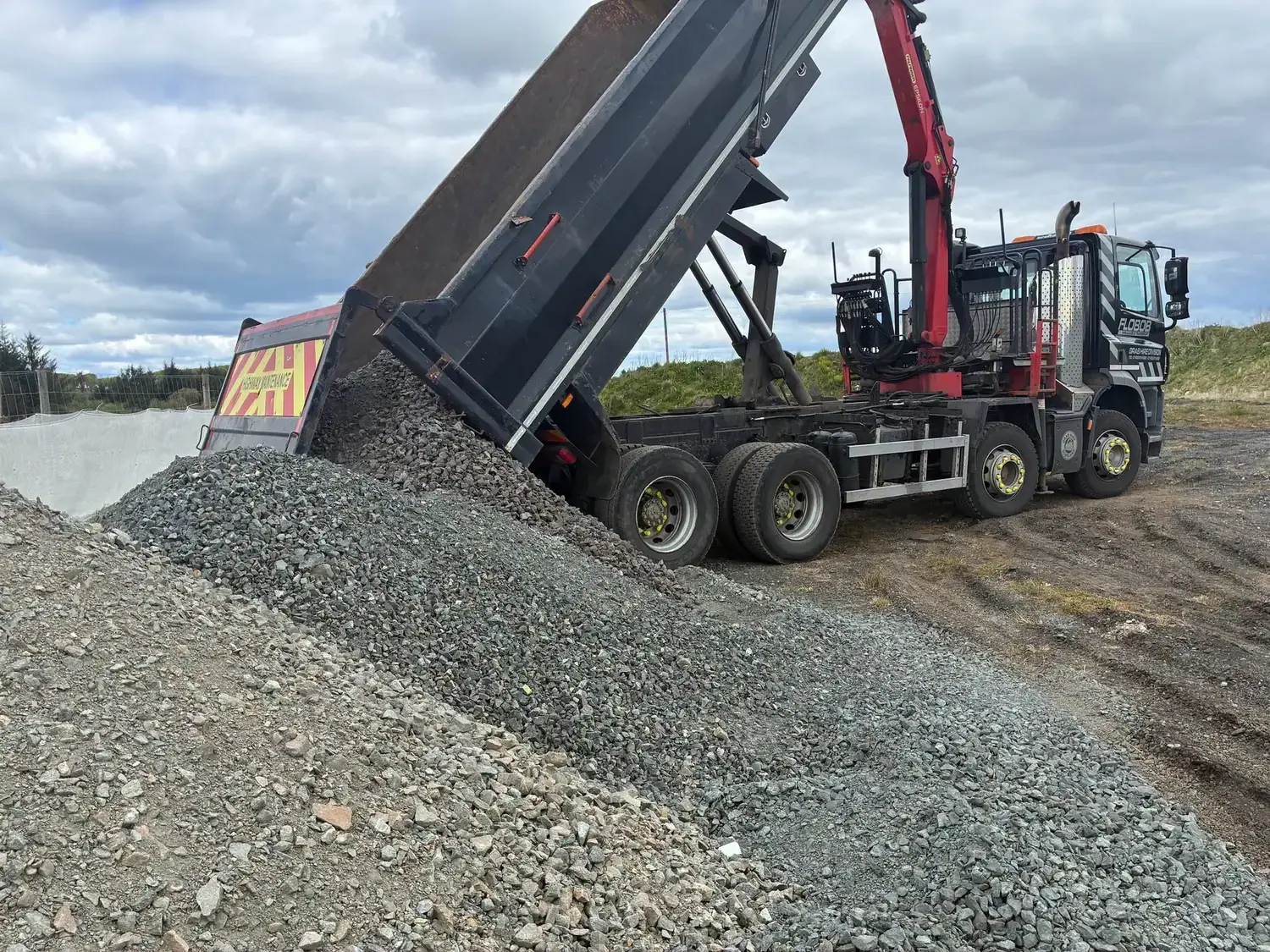
If you are bringing materials in as well as removing excavated soil, an aggregate delivery and soil collection may be arranged on the same agreed visit. Aggregate delivery has a minimum order of five tonnes, and material, collection and access details need to be confirmed in advance.
Same-day or next-day availability may be possible across Glasgow, Ayrshire, Lanarkshire, Falkirk and West Lothian, subject to availability, access and the job requirements. A request for a date is an enquiry, not a confirmed booking.
What to send for an estimate
To help us check the job, include:
Your postcode and the location of the material.
What the material is and where it came from.
An approximate quantity, with photos if useful.
Access details, including parking, overhead obstacles and any restrictions.
Your preferred collection date, if you have one.
You can get a free estimate in seconds on our website. We will then check the service, access, price and availability with you. If you are unsure whether a skip permit applies or whether a grab lorry can reach the material, tell us what you are planning and we will help you work out the next step.